
Computational Thinking
Develop the ability to break down complex problems, recognize patterns, and design step-by-step solutions. This foundational skill empowers students to approach challenges logically and creatively.

⁉️Why is this important
- ✓Builds a strong foundation for coding and algorithmic thinking
- ✓Teaches how to break down big problems into clear, logical steps
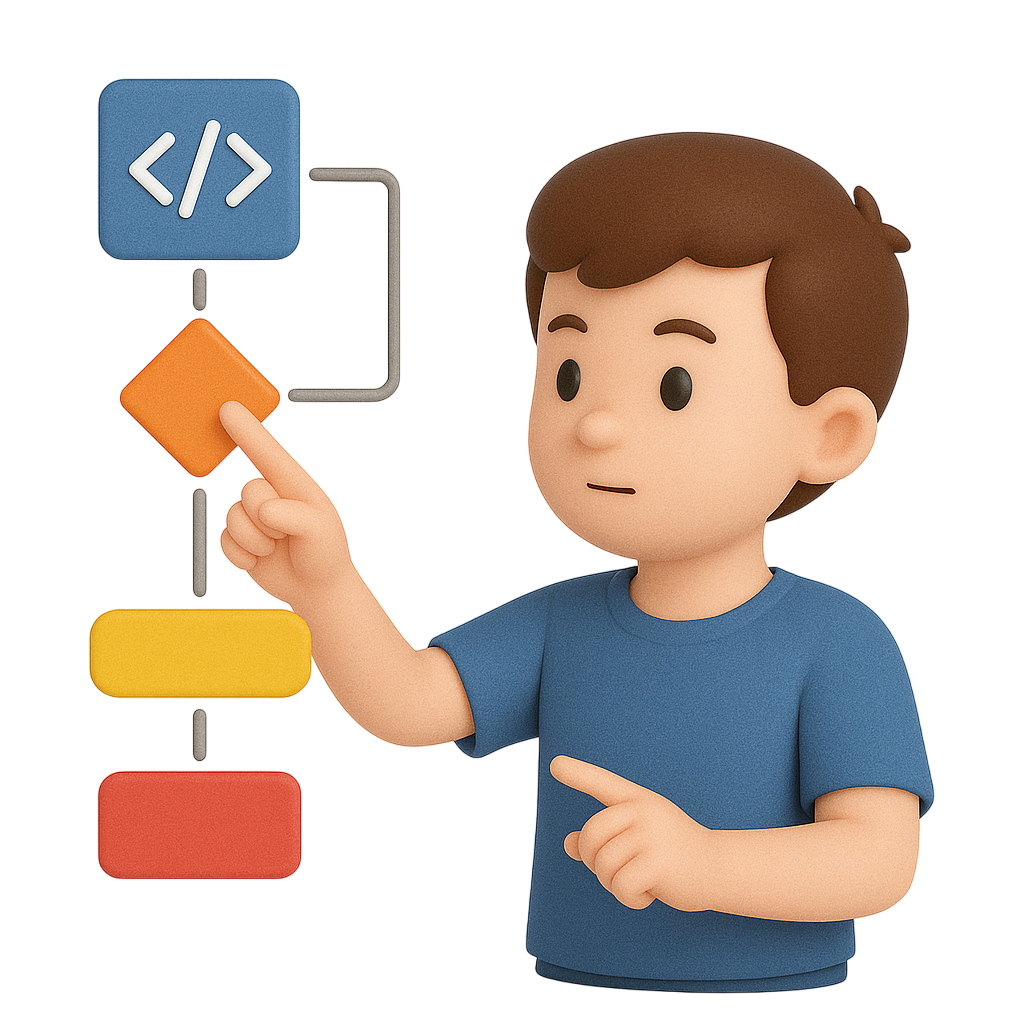
- ✓Helps visualize solutions using flowcharts and decision trees
- ✓Improves pattern recognition and smart problem-solving
- ✓Boosts confidence in reasoning, analysis, and structured thinking
🎯What you'll learn
- ✓Problem decomposition and abstraction techniques
- ✓Pattern recognition and generalization skills
- ✓Algorithmic thinking and logical reasoning
- ✓Drawing flowcharts and decision trees
- ✓Debugging and systematic testing approaches
⭐Core Concepts
Problem Decomposition
Break complex problems into smaller, manageable parts for systematic solving.
Abstraction
Filter out the noise and focus on the core problem to solve.
Pattern Recognition
Identify similarities and patterns to create reusable solutions.
Algorithmic Thinking
Design step-by-step processes to solve problems efficiently.
Logical Reasoning
Develop clear, structured thinking for better decision making.
Computational thinking is the foundation of all modern problem-solving. Students learn to break down complex challenges into manageable parts, identify patterns that can be generalized, and create step-by-step solutions that can be executed by computers or humans. This skill is essential not just for programming, but for any field that requires systematic problem-solving. Through hands-on activities and real-world applications, students develop a mindset that enables them to tackle any challenge with confidence and creativity.
🧩Sample Exercises
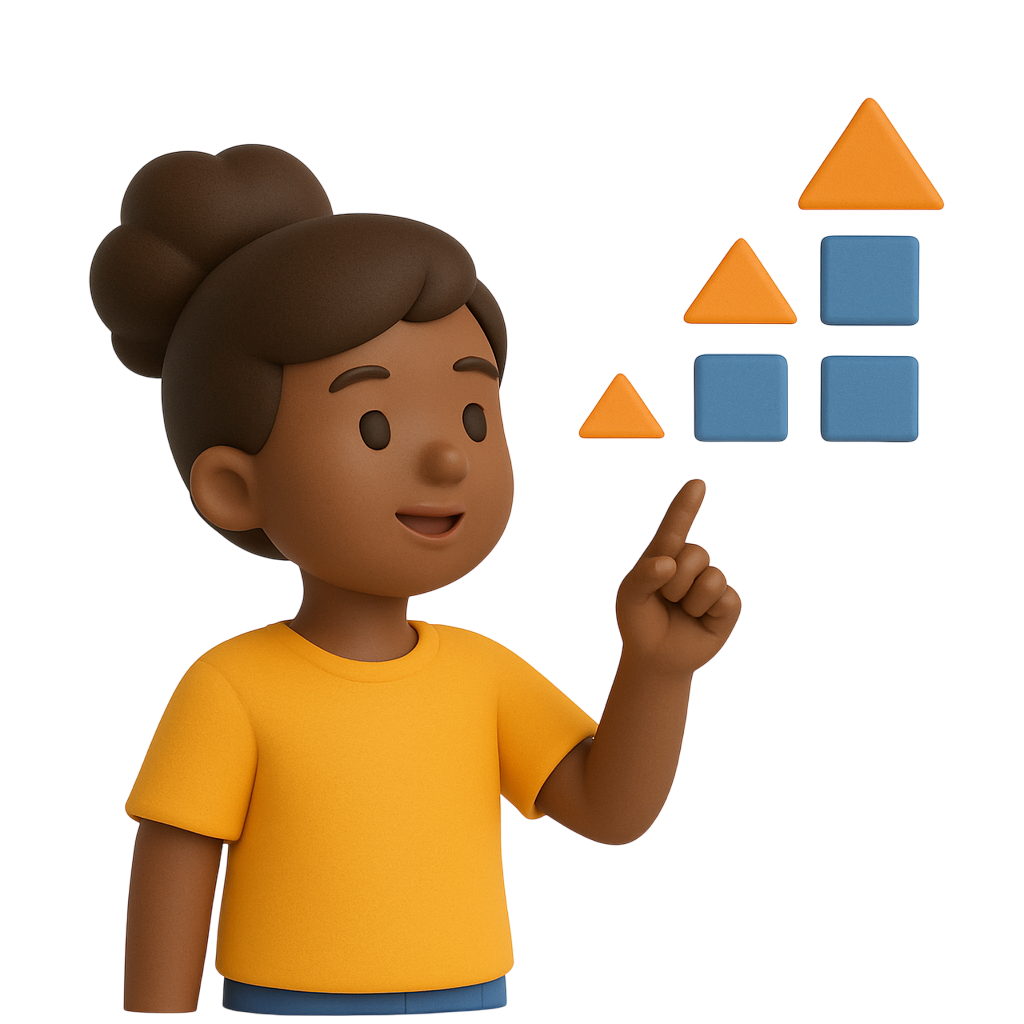
Pascal's Triangle
Explore number sequences and patterns in mathematics.

Stacking Rings Problem
Arrange the rings blindfolded in ascending order to make a tower.
Find the Class Topper
Finding the highest scorer from a scores dataset.

Cheapest Flight Ticket
Find the cheapest flight ticket using Dijkstra' algorithm.